
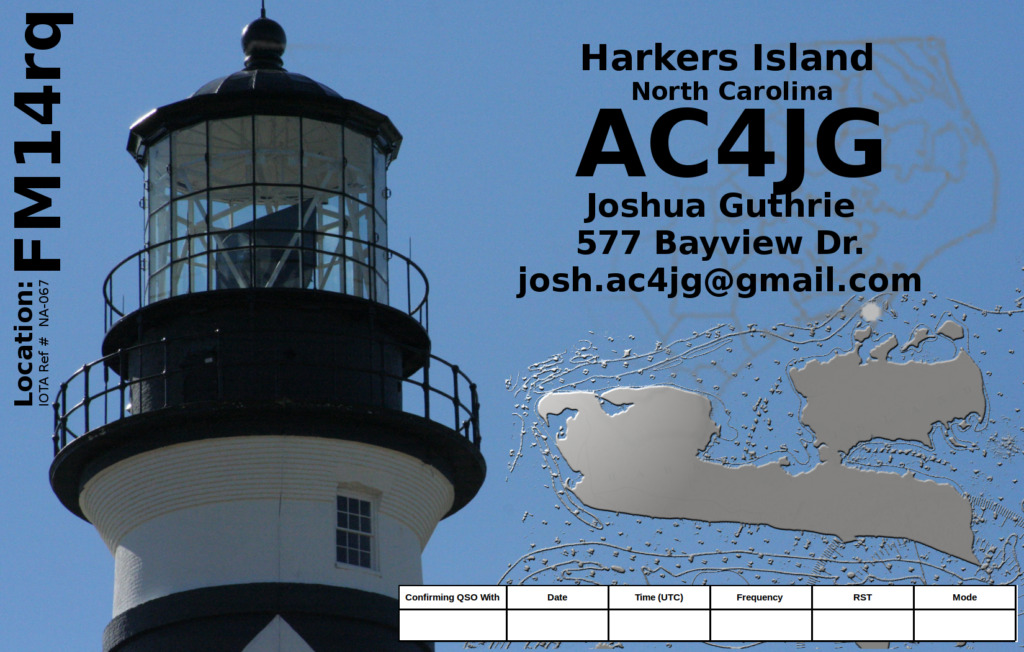
I have various interest in Ham Radio. I spend as much time as I can hanging around the local 2 Meter Repeater. However, I joke that I have the face for radio, and the voice for digital. On HF, I would spend quite a bit of time on VaraAC, and on occasion JS8 Call. You can’t beat Winlink for EmCOM. In my humble opinion, it’s is the gold standard. W4BTA turned me onto WinLink Wednesdays. Highly recommend that net.
VaraAC Background Info
VarAC is a peer-to-peer digital communication platform designed specifically for amateur radio operators. It provides a familiar, chat-like experience over RF, allowing operators to conduct real-time keyboard conversations, exchange files, and maintain message queues without requiring any internet infrastructure.
The system feels much closer to instant messaging than traditional ham digital modes. Operators can call CQ, see station presence, watch typing indicators, and maintain structured message exchanges—all over standard SSB bandwidth.
VarAC itself is free software. The performance engine underneath it, the VARA modem, is available in both free and paid versions.
The Technology Behind VARA
VARA is a soundcard-based software modem that uses modern digital signal processing techniques to achieve high throughput and strong weak-signal performance within the constraints of amateur radio bandwidth.
Technically, VARA employs:
- Orthogonal Frequency Division Multiplexing (OFDM)
- Adaptive data rate control
- Forward Error Correction (FEC)
- Automatic Repeat Request (ARQ) reliability
Unlike legacy packet systems that run at fixed speeds, VARA continuously evaluates link quality and automatically adjusts its data rate to match current band conditions. When signals are strong, it increases throughput. When conditions degrade, it slows down to preserve reliability.
Because VARA is purely software-based, it runs using a standard computer soundcard and an SSB radio—no external hardware modem is required. This dramatically lowers the barrier to entry compared to traditional high-performance modes like PACTOR.
Weak-Signal Performance
Weak-signal capability is where VARA has built its reputation.
Compared to traditional 1200-baud packet radio, VARA is dramatically faster and more efficient. Even in narrow bandwidth configurations, it typically delivers several times the effective throughput of classic AX.25 packet.
When compared to other soundcard modes such as WINMOR or ARDOP, most operators find that VARA connects more reliably and transfers data more quickly under typical HF conditions. Its adaptive OFDM design handles fading and multipath better than many earlier digital modes.
That said, in extremely poor HF conditions—heavy interference, very low signal-to-noise ratios, or severe selective fading—dedicated hardware systems like PACTOR still maintain an edge. PACTOR has decades of refinement behind specialized hardware modems and remains the benchmark for “last-ditch” HF reliability.
In practical everyday operating, however, VARA offers an exceptional balance of performance, cost, and accessibility.
Free vs. Paid VARA
VARA is fully functional in its free form, but with intentionally reduced maximum speed. This allows operators to experiment, chat, and learn the system without cost.
In the free version:
- All core functionality works
- Connections are fully reliable
- Maximum throughput is limited
- File transfers are noticeably slower
For casual keyboard chat and experimentation, the free version is often sufficient.
The paid (registered) version unlocks the modem’s full adaptive speed range. Under good band conditions, throughput can increase dramatically, making file transfers and large message handling much more efficient. Serious Winlink users and frequent digital operators typically find the upgrade worthwhile.
Importantly, both versions maintain the same robustness and on-air behavior—the paid version primarily removes the speed governor.
Common Use Cases
VarAC has found a strong following across several segments of the amateur radio community.
- HF Keyboard Chat. This is VarAC’s natural home. Operators who enjoy ragchewing but prefer digital modes appreciate the conversational feel. The presence indicators and structured messaging make it far more interactive than older keyboard modes.
- Emergency Communications (EmComm). Because VarAC and VARA require no internet infrastructure and provide reliable ARQ messaging, they are well suited for disaster and off-grid communications. Many emergency groups use VARA as a transport layer for formal traffic.
- Portable and Mobile Operation. Since VARA only requires a computer, sound interface, and radio, it is popular with portable operators, RV travelers, and field deployments where carrying specialized hardware modems would be impractical.
Limitations and Considerations
No system is perfect, and VARA/VarAC does have some tradeoffs.
The VARA protocol is proprietary, which is a philosophical concern for some operators who prefer fully open digital modes. In addition, the ecosystem is primarily Windows-centric, though many operators successfully run it under WINE on Linux systems.
Finally, while VARA performs very well under weak-signal conditions, dedicated hardware solutions like PACTOR still retain the edge in the most extreme HF environments.
WinLink Background Info
Winlink — Resilient Email Over Radio
If VarAC feels like real-time texting over HF, Winlink fills a different but equally important role: dependable message delivery when normal infrastructure is unreliable or unavailable.
Winlink has been around long enough to earn real operational credibility. Originally developed for maritime operators far offshore, it was built from the start with the assumption that connectivity would be intermittent, fragile, or completely missing. That design philosophy still defines the system today.
At a high level, Winlink allows licensed amateur radio operators to send and receive email over HF, VHF, and UHF radio. A message created on a local computer is transmitted via radio to a gateway station, routed through the Winlink message system, and delivered either to another radio user or to the internet email world.
What makes Winlink particularly valuable—especially in emergency communications—is not just that it works, but how deliberately redundant the system is.
Layered Redundancy by Design
Winlink is not a single server or a single network path. It is a distributed system built with multiple overlapping layers of resilience.
Global Network of Gateway Stations
Thousands of volunteer-operated RMS (Radio Message Server) gateway stations are deployed worldwide. These gateways listen on multiple bands and frequencies and serve as entry points into the Winlink system.
In practice, this provides strong geographic diversity:
- If one gateway is unavailable, another is usually within reach
- If local infrastructure is damaged, HF propagation often provides access to distant regions
- Operators can shift bands and frequencies to work around congestion or outages
For HF users in particular, the ability to reach gateways hundreds or even thousands of miles away is a major resilience advantage.
Redundant Message Server Infrastructure
Behind the RF gateways sits the Winlink Common Message Server (CMS) cluster. Rather than relying on a single data center, Winlink uses multiple geographically separated servers that continuously synchronize message traffic.
Key characteristics include:
- mirrored server architecture
- automatic failover
- continuous database replication
- load distribution
From a reliability standpoint, this eliminates the classic single-point-of-failure problem. Loss of an individual server does not take the system offline.
Multiple Supported Radio Transports
Winlink is intentionally modem-agnostic and supports several digital transports, including:
- VARA HF and VARA FM
- PACTOR
- ARDOP
- AX.25 packet
This flexibility allows operators to adapt to equipment availability and changing band conditions. If one transport method is degraded or unavailable, another may still provide a viable path.
Real-World Robustness
A natural question is: what would it actually take to disrupt Winlink?
Because of its distributed architecture, localized failures typically have minimal impact on the global system.
Events Winlink Typically Rides Through
Experience and system design both indicate that Winlink generally remains operational during:
- hurricanes
- regional flooding
- wildfires
- tornado outbreaks
- localized power failures
- loss of individual RMS stations
- regional internet disruptions
In these scenarios, operators may lose their closest gateway but can usually reach another via HF.
Events That Would Seriously Impact the Network
To cause widespread global disruption to Winlink would likely require a much larger event affecting multiple layers simultaneously, such as:
- major multi-continent internet backbone failure
- simultaneous loss of multiple CMS data centers
- or a severe, long-duration geomagnetic storm that significantly degrades HF propagation worldwide
These are high-threshold scenarios. Most realistic natural disasters do not reach this level of systemic impact.
The Important Fallback: Peer-to-Peer Operation
One of Winlink’s most valuable resilience features is its ability to operate without the global server infrastructure when necessary.
Winlink supports direct peer-to-peer (P2P) radio connections between stations. In this mode, messages are exchanged directly over RF without involving RMS gateways or the CMS network.
This capability provides an important safety net.
Even in a degraded environment where:
- internet connectivity is severely limited
- parts of the Winlink infrastructure are unreachable
- or operators are fully off-grid
…stations can still pass traffic directly over radio.
While P2P operation does not provide the full convenience of the global email system, it preserves the core capability: moving messages when other paths are unavailable.
Why Emergency Communications Groups Use Winlink
Emergency communications organizations tend to adopt tools that have proven themselves under real conditions. Winlink continues to see widespread EmComm use because it combines several important traits:
- Strong weak-signal performance. When paired with modern modems such as VARA or PACTOR, Winlink benefits from adaptive speed control, forward error correction, and ARQ retransmission.
- Store-and-forward architecture. Messages are queued and delivered when connectivity becomes available. Continuous links are not required.
- Infrastructure flexibility. Operators can use HF for long haul, VHF/UHF locally, or peer-to-peer when needed.
- Support for formal traffic. Built-in support for ICS forms, structured messages, and attachments makes it suitable for served-agency work.
My Ham Shack
Well, here’s the shack. Almost all the equipment is mounted on a 19″ rack. Incredibly glad I did this. It keeps everything manageable.
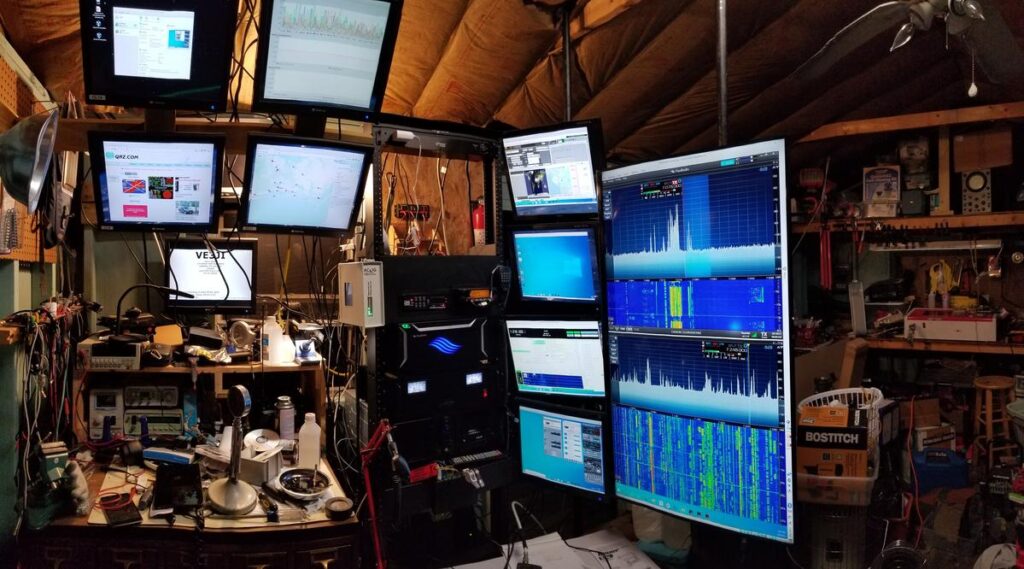
The top left item is the APRS TNC that I made. To the right is the antenna tuner and the 2 Meter radio that is dedicated to APRS (pending the tower getting re-installed).
Below that is the Flex 6400. Love that radio. I have it configured to run remote and that is how I typically operate it. The nine monitors for the rig are a bit of a story. I bid on an online auction for a group of monitors. I thought I was getting six or seven of them, so I bid like 30 bucks. When I got there it was almost 40 monitors! Being I had plenty, I decided to go overboard. Shame I rarely operate it from the shack.
Right now, the Flex won’t transmit. It goes into the transmit mode, but there is not output power. Looks like it needs to go back to the mothership, but I’m on the fence if I want to spend the money. These days, I was using it mostly for shortwave listening and hadn’t been spending much time on HF transmitting. Truth is, I kinda got bored with it. I Worked All States (WAS), and have done the DXCC on multiple bands (I think three at this point). Other than the random rag-chew, I started to have a hard time turning the dial.
Below the Flex is the Astron Power Supply. A 30A unit.
Below that is the rack mounted computer. I run all the software as virtual machines. Makes it crazy easy to backup and manage. In the future, I’ll probably take the copy of linux off it and make it proper hypervisor. I’ve had real good luck with XCP-NG at work, so I’ll probably go with that.
Below that is the enclosure I made for my transverters. They are the Ukrainian transverters. They get a bit of a bad (and I think) undeserved rap for being noisy. The key is not to overdrive them. I had both the 2 Meter and the 70 cm transverter. However, the 70 cm got cooked in a lightning strike about half a dozen years ago.
In the very back, on the wall is a homemade digital picture frame that I use to display my digitized QSL Cards.
The rest of the clutter is various test gear and and normal shed stuff.
Current Interest
I picked up a Hermes Lite 2 kit. Love that little radio. Picked up a 50 watt amplifier for it. I think my HF adventure will end up going this route in the future. In my opinion, it’s probably the most radio for the dollar out there today.
At the moment I’m hooked on Meshtastic. It’s kinda like a modern APRS.
APRS
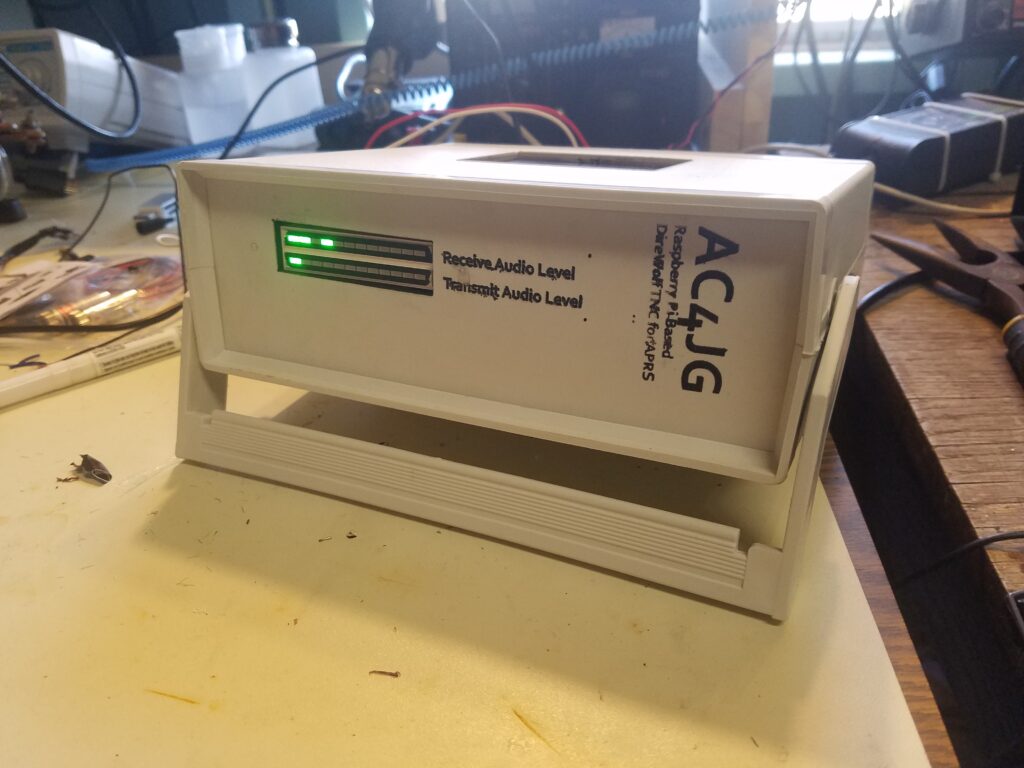
I joke that APRS is the gateway drug into digital modes. Over the years, I built two TNCs. This is a link to that second TNC. Right now, it’s inactive until I can get the tower back up.
NOTE TO ME, create this page and link here
QRZ
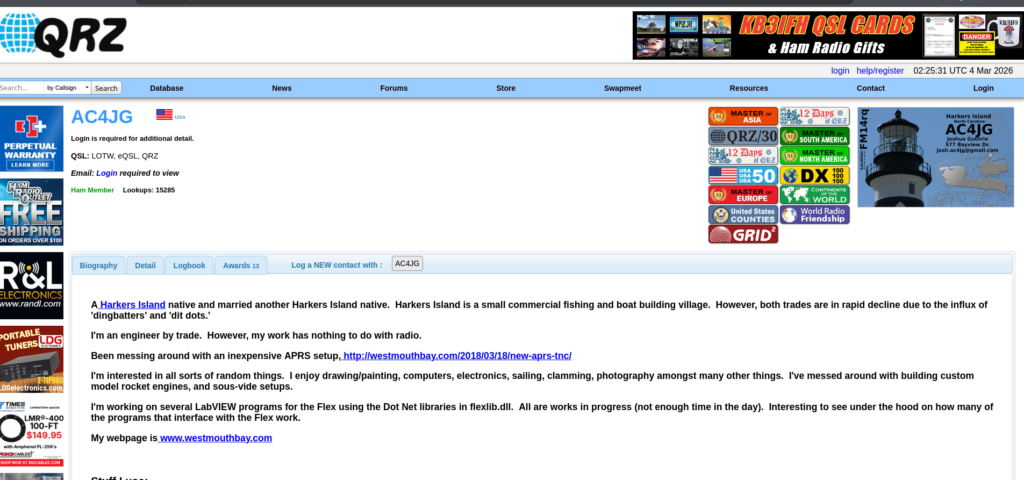
A link to my QRZ page. Has some basic info about me and the shack.
Map of my Contacts via HRDLOG.net
